
News

How Do You Choose the Right Stone Display Rack for Your Showroom and Jobsite?

2026-02-03 0 Leave me a message

Abstract: A Stone Display Rack looks simple—until slabs chip, samples slide, customers can’t see patterns clearly, or your team wastes time moving heavy pieces the wrong way. This in-depth guide breaks down the real-world pain points behind stone merchandising and storage, then walks you through practical selection criteria: capacity, layout, protection, stability, mobility, safety, and long-term maintenance. You’ll also find checklists, a comparison table, and FAQs to help you make a confident decision for showrooms, warehouses, and project sites.


Table of Contents

  1. Outline
  2. What Problems Should a Stone Display Rack Solve?
  3. Which Rack Type Fits Your Stone Products?
  4. What Should You Check Before Buying?
  5. How Do You Prevent Chips, Scratches, and Cracks?
  6. How Do You Plan Layout for Visibility and Flow?
  7. What Safety Features Matter Most?
  8. How Do You Keep Daily Operations Smooth?
  9. Why Work with Quanzhou Zhongbo Display Props Co., Ltd.?
  10. FAQ
  11. Next Step

Outline

  • Identify common customer and operator pain points (damage, clutter, low visibility, slow handling).
  • Match rack types to what you sell (slabs, tiles, samples, countertops, mosaics).
  • Use a selection checklist (capacity, stability, protection, mobility, modularity, finishing).
  • Plan for safe handling and a clean customer browsing experience.
  • Maintain racks and accessories to reduce long-term replacement costs.
  • Answer frequent buying questions with practical, field-tested guidance.

What Problems Should a Stone Display Rack Solve?

Stone Display Rack

When people shop for stone, they’re not just buying color—they’re buying confidence. They want to see veining, texture, and finish clearly, compare options quickly, and trust that what they pick will look the same when installed. Meanwhile, your team needs storage that minimizes breakage and speeds up handling. A good Stone Display Rack solves both sides of this equation.

  • Damage and loss: Edge chips, corner cracks, and surface scratches often happen because slabs lean against hard metal, sit on gritty floors, or shift when moved.
  • Low product visibility: Poor angles and overcrowded displays make it hard for customers to see patterns, causing decision fatigue and slower sales.
  • Unsafe handling: Unstable frames and uneven load distribution increase tip risk and force staff into awkward lifting positions.
  • Wasted space: Racks that don’t match your slab sizes or inventory mix create dead zones, cluttered aisles, and bottlenecks.
  • Slow turnover: If it takes too long to pull a slab, present it, then return it safely, your team loses hours every week.

The goal is simple: protect stone, present it beautifully, and keep movement predictable and safe.


Which Rack Type Fits Your Stone Products?

Not all stone inventory behaves the same. Full slabs need stable angled support; tiles and sample boards need fast browsing; mixed inventory needs flexible systems. The right Stone Display Rack depends on what you stock and how customers interact with it.

Rack Style Best For Strengths Watch Outs
A-Frame Rack Full slabs, larger panels High stability, good capacity, easy side access Needs clear aisle width; add padding to protect edges
L-Frame / Single-Sided Rack Wall-side display, tighter showrooms Space-efficient, clean presentation Load must be balanced; consider anchoring and anti-slip base
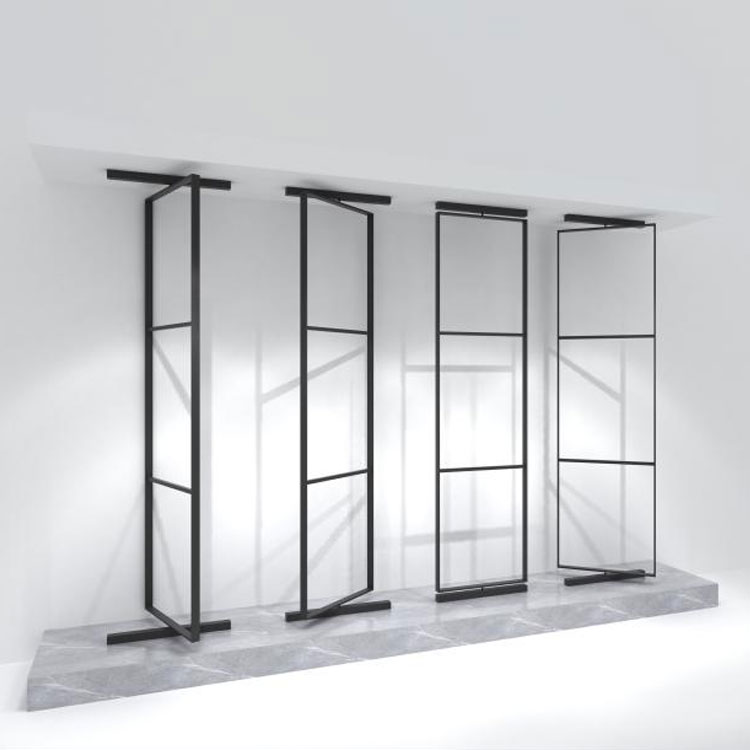
Sliding Panel Display Samples, tiles, thin panels Customer-friendly browsing, quick comparison Needs smooth tracks and controlled spacing to prevent rubbing
Pallet / Warehouse Rack Back-of-house storage, high volume Forklift compatible, scalable, organized inventory Requires strict load rules and clear labeling

If your operation spans both showroom and warehouse, you’ll usually need a showroom-facing Stone Display Rack plus a storage rack system that keeps overflow safe and accessible.


What Should You Check Before Buying?

Here’s the checklist that prevents most “we bought it and regret it” situations. Use it like a pre-purchase inspection—especially if you’re comparing multiple designs.

  • Capacity that matches reality: Don’t buy based on theoretical maximum. Plan for typical slab thickness, uneven weights, and how often pieces are swapped.
  • Stable geometry: Wider base footprints, strong cross-bracing, and consistent support angles reduce sway and tip risk.
  • Edge-friendly contact points: Stone fails at edges first. Look for protective strips, rubberized supports, and non-abrasive separators.
  • Surface finishing: Powder-coated or treated metal reduces corrosion and prevents sharp burrs from scratching stone.
  • Modularity and expansion: If your inventory grows seasonally, modular units keep layout consistent without forcing a full redesign.
  • Mobility needs: If you re-stage often, consider designs that pair with dollies or include safe lifting points. If you rarely move racks, prioritize rigidity over wheels.
  • Assembly and maintenance: A rack that’s easy to bolt, adjust, and clean tends to stay in good condition longer.

One practical tip: walk your space as if you’re a customer and as if you’re the handler. If a slab can’t be shown without awkward maneuvering, the rack isn’t truly “efficient,” no matter how strong it looks.


How Do You Prevent Chips, Scratches, and Cracks?

Stone damage usually comes from three sources: hard contact, grit, and uncontrolled movement. A high-quality Stone Display Rack reduces all three with a few key design habits.

  • Use soft interfaces: Rubber strips, protective sleeves, and non-slip pads reduce micro-chipping at the edges and keep polished surfaces clean.
  • Separate pieces correctly: Use dividers or spacing bars so slabs don’t rub during browsing or vibration.
  • Control the lean angle: Too upright increases tip risk; too steep can concentrate stress on the bottom edge. Consistent angles distribute load more predictably.
  • Keep the base clean: Grit on the floor acts like sandpaper. Add base rails that are easy to wipe and keep the contact zone elevated.
  • Label and zone inventory: When staff don’t have to “shuffle” slabs to find the right one, you avoid accidental impact.

If you’ve ever seen a hairline crack appear after repeated handling, it’s often the same story: the slab was safe “once,” but the rack allowed tiny shifts over time. Prevention is about consistent restraint, not just strength.


How Do You Plan Layout for Visibility and Flow?

A Stone Display Rack is part storage and part storytelling. Customers buy faster when they can navigate without feeling overwhelmed. Try structuring the space like a guided comparison rather than a warehouse wall.

  • Group by decision logic: Color families, finish types (polished/honed/leathered), or price tiers—pick the system your customers naturally ask for.
  • Keep “hero” stones accessible: Put best-sellers where they can be pulled safely without moving other slabs.
  • Design for two-person handling: Ensure aisles allow two staff members and a slab to pass without twisting.
  • Use lighting and angles: Proper angles plus good lighting show veining and sparkle far better than flat, crowded placement.
  • Plan a staging zone: A small open area near the rack lets you present options side-by-side without blocking traffic.

In many showrooms, the fastest improvement isn’t “more inventory.” It’s “less friction.” When a customer can quickly shortlist three options, you’ve already won half the sale.


What Safety Features Matter Most?

Stone handling is high-stakes. Your rack should create predictable behavior: pieces don’t slide unexpectedly, frames don’t sway, and the load stays where it belongs. Focus on these safety essentials:

  • Anti-slip base contact: Non-slip feet or base rails help prevent shifting on smooth floors.
  • Reinforced joints and bracing: Stress concentrates at connections; strong joints reduce long-term deformation.
  • Rounded or protected edges: Avoid sharp metal that can cut straps, scratch stone, or injure handlers.
  • Clear load guidance: Marked capacity and spacing rules help staff keep a consistent, safe routine.
  • Optional anchoring for single-sided displays: Wall-adjacent racks often benefit from anchoring options to reduce tip risk.

Safety is not only about preventing accidents; it’s also about reducing “near-misses” that quietly drain confidence and slow down your team.


How Do You Keep Daily Operations Smooth?

Stone Display Rack

Even the best Stone Display Rack fails if day-to-day use is frustrating. The goal is repeatability: anyone on your team should be able to retrieve, present, and return stone without improvising.

  • Standardize accessories: Keep the same protective pads and dividers across racks so replacements are easy.
  • Set a weekly inspection routine: Check bolts, padding wear, base cleanliness, and any wobble. Fix small issues before they become damage events.
  • Track top movers: Put high-turnover materials in the most ergonomic locations. Don’t bury best-sellers behind slow stock.
  • Use simple labeling: A consistent code system (color/collection/size) reduces searching and re-stacking.
  • Plan for updates: If your product mix changes, modular racks and adjustable components reduce costly replacements.

Over time, the right setup becomes an invisible advantage: customers feel relaxed, staff move confidently, and inventory stays presentable longer.


Why Work with Quanzhou Zhongbo Display Props Co., Ltd.?

If you’re investing in a Stone Display Rack, you’re buying more than steel and bolts—you’re buying a system that should protect high-value materials and represent your brand. Quanzhou Zhongbo Display Props Co., Ltd. focuses on display and merchandising solutions designed for real operational use: stable structures, practical protection details, and formats that fit both showroom presentation and storage efficiency.

  • Application-focused design: Racks designed around how stone is actually handled, not just how it looks on paper.
  • Customization support: Options to align rack size, spacing, and configuration with your inventory and floor plan.
  • Finish and protection options: Practical surface finishing and protective contact solutions that help reduce everyday wear.
  • Consistent manufacturing process: Repeatable build quality so expansions match existing racks in the same space.

When your display feels organized and safe, customers trust your operation—and your team spends less time “fighting the furniture” and more time closing projects.


FAQ

  • How many slabs should a Stone Display Rack hold?
    Capacity depends on slab thickness, weight range, and how often you swap inventory. A good rule is to plan for comfortable access, not maximum packing. If slabs are tightly compressed, you increase scratch risk and slow down handling.
  • What’s better for a showroom, an A-frame rack or a sliding display?
    For full slabs, A-frame racks are often preferred because they’re stable and easy to access from both sides. Sliding displays are excellent for sample panels and tiles where customers browse frequently and compare quickly.
  • How do I reduce edge chipping during display?
    Use protective strips on all contact points, keep base areas clean, and maintain consistent spacing between slabs. Edge damage is usually caused by hard contact plus tiny shifts over time.
  • Do I need wheels on my Stone Display Rack?
    Only if you regularly re-stage displays. Wheels can add convenience, but fixed racks often deliver better rigidity. If mobility is required, prioritize secure locking mechanisms and stable load paths.
  • How wide should aisles be around stone racks?
    Plan for safe two-person handling and turning clearance. If staff must twist or squeeze while moving slabs, the space is too tight. Wider aisles reduce both damage and injury risk.
  • How often should racks be inspected?
    A quick weekly check is ideal: tighten bolts, inspect padding wear, clean base areas, and confirm there’s no wobble. Preventive maintenance is far cheaper than replacing damaged slabs.

Next Step

If you want a Stone Display Rack that protects your inventory, improves customer browsing, and keeps handling safe and efficient, align the rack type with your stone products, validate capacity and protection details, and plan your layout for visibility and workflow.

Ready to upgrade your showroom or storage system with a solution tailored to your space and inventory? Reach out to Quanzhou Zhongbo Display Props Co., Ltd. to discuss your requirements and get a configuration that fits your daily operations—contact us to start planning your stone display setup today.

Related News
Leave me a message
X
We use cookies to offer you a better browsing experience, analyze site traffic and personalize content. By using this site, you agree to our use of cookies. Privacy Policy
Reject Accept