




QR Code

Contact Us

Phone

E-mail

Address
Shanxia Village, Shanxia Town, Hui'An County, Fujian Province, China



If your stone samples are hard to browse, heavy to handle, or look “messy” under showroom lights, you’re quietly losing sales—often without realizing it. A well-designed Stone Display Rack fixes the biggest pain points at once: it makes selection faster, reduces damage and safety risks, improves perceived quality, and helps customers compare finishes without fatigue.
In this guide, I’ll walk through what buyers actually struggle with, what rack designs solve those struggles, and the selection criteria that matter (load, stability, spacing, safety, workflow, and long-term maintenance). I’ll also share a buying checklist you can use to compare suppliers, plus a practical FAQ section for common showroom questions.
Let’s be blunt: stone sells with the eyes and the hands. Customers want to compare color, veining, texture, and reflectivity—quickly and confidently. When samples are stacked on the floor, leaning randomly, or stored in a back room, three things happen:
The longer it takes to find and compare samples, the more likely buyers postpone—or buy elsewhere. If a customer needs staff help for every single sample pull, your showroom becomes a bottleneck.
Chipped corners, scratched faces, and cracked pieces don’t just cost money—they quietly downgrade perceived quality. Even if the stone is premium, damaged samples make it look “average.”
Stone is heavy. Poor stability, weak bases, or crowded racks can cause tipping hazards. Customers can feel that risk—even if nothing happens—so they keep distance, browse less, and trust less.
Most showrooms don’t have “too little inventory.” They have inventory that isn’t organized around decision-making. A well-planned Stone Display Rack strategy can reclaim floor space and increase SKU visibility.
Reality check: If your staff says “Let me find that sample for you” more than a few times per hour, you’re paying hidden labor costs. A smarter Stone Display Rack setup converts that labor into better customer experience instead.
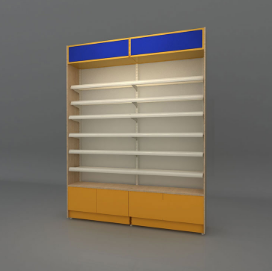
A Stone Display Rack is not just storage. It’s a sales tool. The best systems deliver four practical outcomes:
That’s why modern racks often include stable bases, modular frames, and smoother mechanisms for browsing—so customers can interact with stone without fear (or friction). If you want one guiding principle: make comparison effortless.
There’s no single “best” rack for every showroom. The right choice depends on sample size, SKU count, traffic flow, and how hands-on you want browsing to be. Here’s a practical comparison you can use when planning your next Stone Display Rack purchase.
| Rack type | Best for | Why it works | Watch-outs |
|---|---|---|---|
| A-frame / leaning frame | Large slabs, limited SKUs, warehouse-style display | Simple, stable, easy to load and reposition | Can look “industrial” if not finished well; needs edge protection |
| Sliding / pull-out panel rack | High SKU showrooms, premium browsing experience | Fast comparison, better visibility, customer-friendly access | Requires good track quality and spacing; needs strong base |
| Waterfall rack (tilting samples) | Tile formats, sample boards, fast browsing zones | Great for “flip and compare” behavior | Not ideal for very heavy or fragile pieces without reinforcement |
| Drawer cabinet (flat samples) | Thin slabs, mosaics, swatches, curated collections | Excellent protection, neat presentation, high density | Needs labeled organization; drawer quality matters |
| Rotating tower / carousel | Compact spaces, curated selections, showroom centerpieces | High “wow” factor, small footprint, easy browsing | Must be balanced and stable; avoid overloading one side |
Tip: Many showrooms combine two systems—one “hero” rack for premium browsing (sliding or carousel) plus a high-density cabinet or A-frame for storage and backups.
Buyers often focus on how a rack looks, then regret it later when samples chip or mechanisms jam. If you want your Stone Display Rack to stay smooth for years, the details below are not optional.
Practical note: Customers love touching surfaces. Your rack should guide that behavior safely—by making the “right” samples easy to pull, and the heavy or fragile ones secure and supported.
Even the best Stone Display Rack can underperform if it’s placed randomly. A layout that supports decision-making usually follows a simple flow: discover → compare → confirm → take-away.
| Zone | Goal | Recommended rack approach | What to add |
|---|---|---|---|
| Discovery | Show variety fast | Rotating tower / waterfall / curated panels | Clear labels, popular colors up front, lighting consistency |
| Comparison | Side-by-side evaluation | Sliding panels or open-access sample boards | Neutral background, sample take-out space, measurement tools |
| Confirmation | Decision confidence | Drawer cabinets / protected premium samples | Order codes, finish notes, matching accessories nearby |
| Take-away | Easy handoff | Portable sample kits + staging shelf | Checkout/inquiry desk nearby, packaging materials |
If you’re redesigning a showroom, start by mapping where customers hesitate. Most hesitation happens during comparison. That’s exactly where a higher-end Stone Display Rack system pays back.
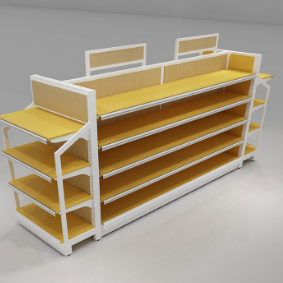
Want fewer surprises? Send a spec checklist. It makes quotes clearer, reduces misunderstandings, and helps you compare suppliers honestly. Here’s a template you can copy and paste.
| Spec item | Your target | Why it matters |
|---|---|---|
| Sample size range | (e.g., 300×600 mm to 600×1200 mm) | Defines spacing, panel count, and loading method |
| Max weight per slot/panel | (e.g., 25–60 kg) | Prevents track failure and bending over time |
| Rack footprint and height | (fit your walkway + sightlines) | Controls traffic flow and comfort |
| Finish / coating | (anti-rust, scratch-resistant) | Looks new longer; reduces corrosion issues |
| Protection features | (pads, edge guards, separators) | Reduces chipping and surface scratches |
| Mobility | (casters, locks, fixed anchors) | Supports re-layouts and safer positioning |
| Customization | (color, logo, modular expansion) | Brand consistency and future growth |
| Packaging & installation | (flat pack vs. assembled) | Affects shipping cost and setup time |
Q1: How many samples should one Stone Display Rack hold?
It depends on sample weight, size, and browsing style. If customers need to flip quickly, fewer samples per panel with comfortable spacing often performs better than cramming everything into one rack. Many showrooms do “front-of-house curated” plus “back-of-house storage.”
Q2: Is a sliding system worth the extra cost?
If you sell premium materials or have a lot of SKUs, yes—because the customer experience is smoother and comparison is faster. Sliding systems can reduce staff labor, increase browsing time, and improve perceived quality. The key is track quality and a stable base.
Q3: What are the most common reasons samples get damaged?
Poor spacing, missing edge protection, and uncontrolled movement (slamming or bumping during pull-out). Another big one is the absence of soft contact points where stone rests. Damage prevention is cheaper than replacing samples.
Q4: How do I keep my showroom looking “premium” with racks?
Choose consistent finishes, match rack color to your brand palette, label cleanly, and keep lighting uniform. A well-organized Stone Display Rack system makes the stone look higher-end without changing the stone itself.
Q5: What information should I provide when requesting a quote?
Sample dimensions, approximate weight range, number of SKUs, your available floor space, and whether you want customers to self-browse. If you share a simple layout sketch, a good supplier can recommend a more efficient mix of rack types.
If you take only one action after reading this: walk your showroom like a first-time buyer. Notice where you hesitate, where you need staff help, and where you worry about handling a heavy sample. Those moments reveal exactly what your next Stone Display Rack system should solve.
Ready to upgrade your showroom experience with a smarter Stone Display Rack solution? Tell Quanzhou Zhongbo Display Props Co., Ltd. your sample sizes, SKU count, and layout constraints—and we’ll help you choose a rack configuration that improves browsing, protects samples, and fits your space. Contact us today to discuss customization options and get a practical quotation.
-
Shanxia Village, Shanxia Town, Hui'An County, Fujian Province, China