





QR Code

Contact Us

Phone

E-mail

Address
Shanxia Village, Shanxia Town, Hui'An County, Fujian Province, China



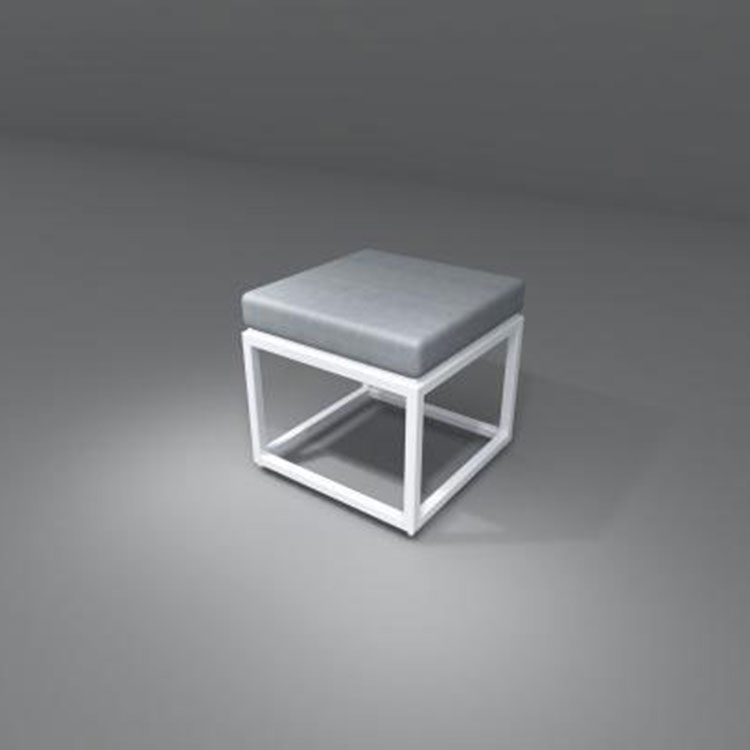
The Soft-Padded Stool has emerged as a versatile seating solution designed to meet the evolving demands of modern interiors, professional environments, and multi-purpose spaces. Positioned between traditional rigid stools and fully upholstered chairs, this product category balances compact form, tactile comfort, and structural reliability. The central focus of this discussion is to examine how a Soft-Padded Stool integrates ergonomic considerations, material engineering, and spatial efficiency into one adaptable seating unit, while remaining aligned with current market expectations and usage scenarios.

At its core, a Soft-Padded Stool is defined by a cushioned seating surface combined with a stable base, often constructed from metal, wood, or reinforced composite materials. Unlike standard stools with hard seating planes, the padded structure distributes body weight more evenly, reducing localized pressure and supporting longer sitting durations. This makes the product suitable for environments where flexibility, frequent movement, and intermittent seating are required, such as laboratories, salons, workshops, kitchens, retail counters, healthcare facilities, and collaborative office zones.
The design philosophy behind the Soft-Padded Stool centers on three pillars: comfort without bulk, durability without excessive weight, and adaptability without mechanical complexity. These principles guide both the internal structure and the external form, ensuring the stool remains easy to integrate into diverse layouts while maintaining consistent performance over time.
From a market perspective, demand for Soft-Padded Stools continues to rise due to increased emphasis on hybrid workspaces, compact living environments, and task-oriented seating. Buyers now prioritize products that can transition seamlessly between uses, withstand frequent repositioning, and maintain aesthetic neutrality across different interior styles. This article examines these factors in detail, beginning with technical parameters that define professional-grade Soft-Padded Stools.
Key Technical Parameters
| Parameter | Specification Range |
|---|---|
| Seat Height | 450–750 mm (fixed or adjustable) |
| Seat Diameter | 300–380 mm |
| Padding Material | High-density foam or molded polyurethane |
| Upholstery Options | PVC, PU leather, fabric, antimicrobial vinyl |
| Base Structure | Steel, aluminum alloy, solid wood |
| Load Capacity | 120–180 kg |
| Mobility Options | Fixed legs or swivel with casters |
| Application Scope | Industrial, medical, commercial, residential |
These parameters reflect industry-accepted standards and allow buyers to assess compatibility with specific operational requirements. Consistency in these dimensions is essential for ensuring user safety, ergonomic alignment, and long-term usability.
The Soft-Padded Stool is engineered to respond to real-world seating challenges rather than purely aesthetic demands. In many work and service environments, seating must support short-duration tasks, frequent posture changes, and rapid user turnover. Traditional chairs often introduce unnecessary bulk, while rigid stools compromise comfort. The Soft-Padded Stool occupies a functional middle ground.
One of the most significant considerations is pressure distribution. The padded seat absorbs and disperses downward force, minimizing stress on the pelvic area. This characteristic is particularly relevant in environments where users repeatedly sit and stand, as it reduces fatigue and supports natural movement patterns. The absence of armrests and backrests encourages upright posture while preserving freedom of motion.
Material selection plays a critical role in performance consistency. High-density foam cores maintain shape integrity under repeated load cycles, preventing seat collapse or uneven wear. Upholstery surfaces are selected not only for visual appeal but also for resistance to abrasion, moisture, and chemical exposure. In professional settings such as clinics or laboratories, antimicrobial and easy-clean surfaces are often specified to meet hygiene protocols.
Structural stability is another defining factor. The base design, whether tripod, four-leg, or pedestal, determines weight distribution and tipping resistance. Reinforced joints and anti-slip footings enhance safety on smooth or uneven flooring. In mobile configurations, caster quality and swivel mechanisms must support smooth rotation without introducing lateral instability.
Common Questions About Soft-Padded Stools
Q: How does a Soft-Padded Stool differ from a standard padded chair in daily use?
A: A Soft-Padded Stool emphasizes compactness and mobility, offering cushioning without the spatial footprint or restrictive structure of a full chair. This allows for quick repositioning, closer access to work surfaces, and greater adaptability in dynamic environments.
Q: Can a Soft-Padded Stool support extended sitting periods without discomfort?
A: When designed with appropriate foam density and seat dimensions, a Soft-Padded Stool can support moderate to extended sitting durations. While it is optimized for task-based seating rather than prolonged sedentary use, proper material selection significantly enhances comfort consistency.
These practical considerations explain why Soft-Padded Stools are increasingly specified in procurement lists for professional and commercial projects.
Usage environments for seating products are no longer static. Spaces are expected to serve multiple functions throughout the day, and furniture must adapt accordingly. The Soft-Padded Stool aligns well with this shift due to its modular nature and minimal mechanical complexity.
In residential settings, compact living arrangements have increased demand for seating that can be stored easily, moved effortlessly, and repurposed as needed. A Soft-Padded Stool can function as kitchen seating, a vanity stool, or supplemental seating for guests without visual or functional disruption. Neutral upholstery tones and streamlined silhouettes ensure compatibility with a wide range of interior themes.
In commercial interiors, particularly retail and hospitality, spatial efficiency directly impacts operational flow. Soft-Padded Stools allow staff to remain mobile while still providing intermittent seating support. Their lightweight construction reduces strain during relocation, while durable finishes maintain appearance under heavy use.
Healthcare and technical environments introduce additional performance expectations. Here, the Soft-Padded Stool must comply with hygiene standards, support precise positioning, and maintain stability during delicate tasks. Height-adjustable models with sealed upholstery surfaces address these requirements effectively.
From a logistical standpoint, the simplified construction of Soft-Padded Stools reduces maintenance demands. Fewer moving parts translate to lower failure rates and easier inspection cycles. This reliability is particularly valuable in institutional settings where downtime impacts productivity.
As usage scenarios diversify, manufacturers increasingly offer customization options, including seat height variations, upholstery materials, and base configurations. This adaptability enables the same core product concept to serve multiple industries without fundamental redesign.
Market expectations for seating products are shaped by broader shifts in work habits, spatial design, and procurement priorities. Buyers now evaluate products not only on initial cost but also on lifecycle value, adaptability, and consistency of performance.
The Soft-Padded Stool is positioned to remain relevant due to its scalable design. Adjustments in material composition, foam technology, and surface treatments can be implemented without altering the fundamental structure. This allows manufacturers to respond to regulatory changes, sustainability considerations, and sector-specific standards efficiently.
Another influencing factor is the growing emphasis on user well-being. While the Soft-Padded Stool is not intended to replace ergonomic task chairs, its supportive cushioning and stable posture alignment contribute positively to short-term comfort and task efficiency. This aligns with organizational efforts to improve working conditions without overcomplicating space planning.
In supply chain terms, the relative simplicity of the Soft-Padded Stool supports consistent manufacturing output and quality control. Standardized components reduce variability and facilitate large-scale deployment across multiple locations, an important consideration for corporate and institutional buyers.
Toward the end of the evaluation process, brand reliability becomes a decisive element. Consistent material sourcing, precise manufacturing tolerances, and responsive customer support distinguish professional suppliers in this segment. Zhongbo has established a reputation for producing seating solutions that meet these expectations, combining technical precision with practical design execution.
Organizations and distributors seeking dependable Soft-Padded Stool solutions can engage directly with Zhongbo to discuss specifications, customization options, and project requirements. For further information or detailed consultation, interested parties are encouraged to contact us to explore suitable configurations and long-term supply opportunities.
Shanxia Village, Shanxia Town, Hui'An County, Fujian Province, China